
Memorial Day Through Different Eyes
A Memorial Day reflection on family, military service and the hidden costs of war. Dusty Rainbolt shares the story of her father’s World War II service, her brother’s Navy career aboard the USS Bridget, and how cats unexpectedly brought the siblings together later in life. What began in a boiler room during the Vietnam era ultimately shaped the course of her brother’s life decades later, turning Memorial Day from a tradition into something deeply personal.
CATS, THE UNIVERSE AND EVERYTHING
Dusty Rainbolt
5/26/20264 min read
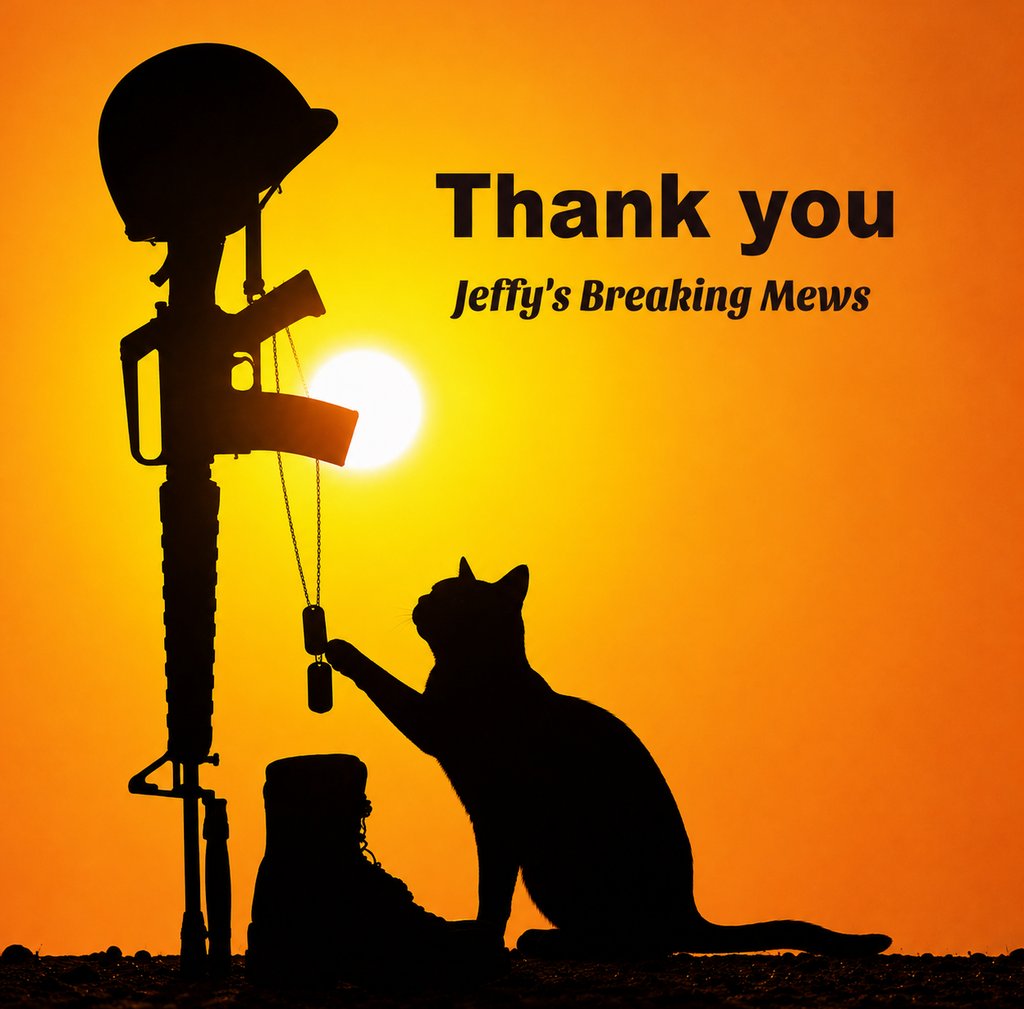
A quiet Memorial Day tribute to the brave men and women who gave everything for our freedom. Image based on a licensed photo from Depositphotos. Modified by Dusty Rainbolt.
It’s Memorial Day. A day many Americans spend grilling hot dogs and splashing in the pool. And that’s as it should be, mostly. We are free to drink beer and visit with family because brave men and women have sacrificed their time, livelihoods and their lives so that we can do just that.
I come from a family where my dad served and fought in World War II. Dad was a communication scout who established radio and phone lines ahead of the U.S. Army and, as I later learned, interfered with German transmissions.
I’ve always planted flags to honor our war dead. But I’d never known anyone personally who made the ultimate sacrifice, until now.
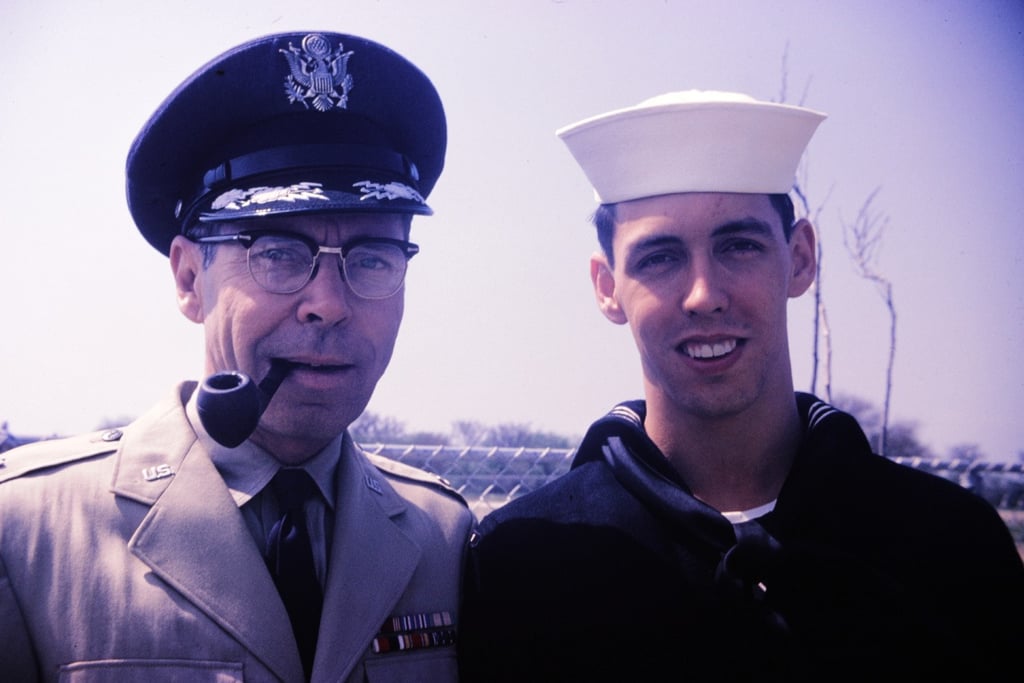
Two generations of military service: Lt. Col. J.D. Rainbolt of the U.S. Air Force and his son, Sailor Art Rainbolt of the U.S. Navy.
My brother, Art Rainbolt, joined the U.S. Navy at the age of 16. Yes, not a typo. He served a three-year tour of duty aboard the destroyer escort USS Bridget. He worked in the boiler room as a fireman. He and the rest of the boiler room crew were the backbone of the ship’s engineering department, spending sweltering hours in the bowels of the ship keeping the steam-powered vessel running. During those three years at sea, he earned his high school diploma.
After leaving the Navy, Art enrolled in college, earned his private pilot’s license and used his GI benefits to get his commercial pilot’s rating. Through grit and determination, he rose through the ranks from tiny commuter airlines to captain of a 737 for Continental Airlines.
He later flew for a South Texas attorney who insisted Art fly in unsafe weather. My brother refused. Daddy always told us, ‘Discretion is the better part of valor.’ Apparently Art understood exactly what that meant. Months after Art left that job, the attorney and the pilot who replaced Art were killed in a plane crash.
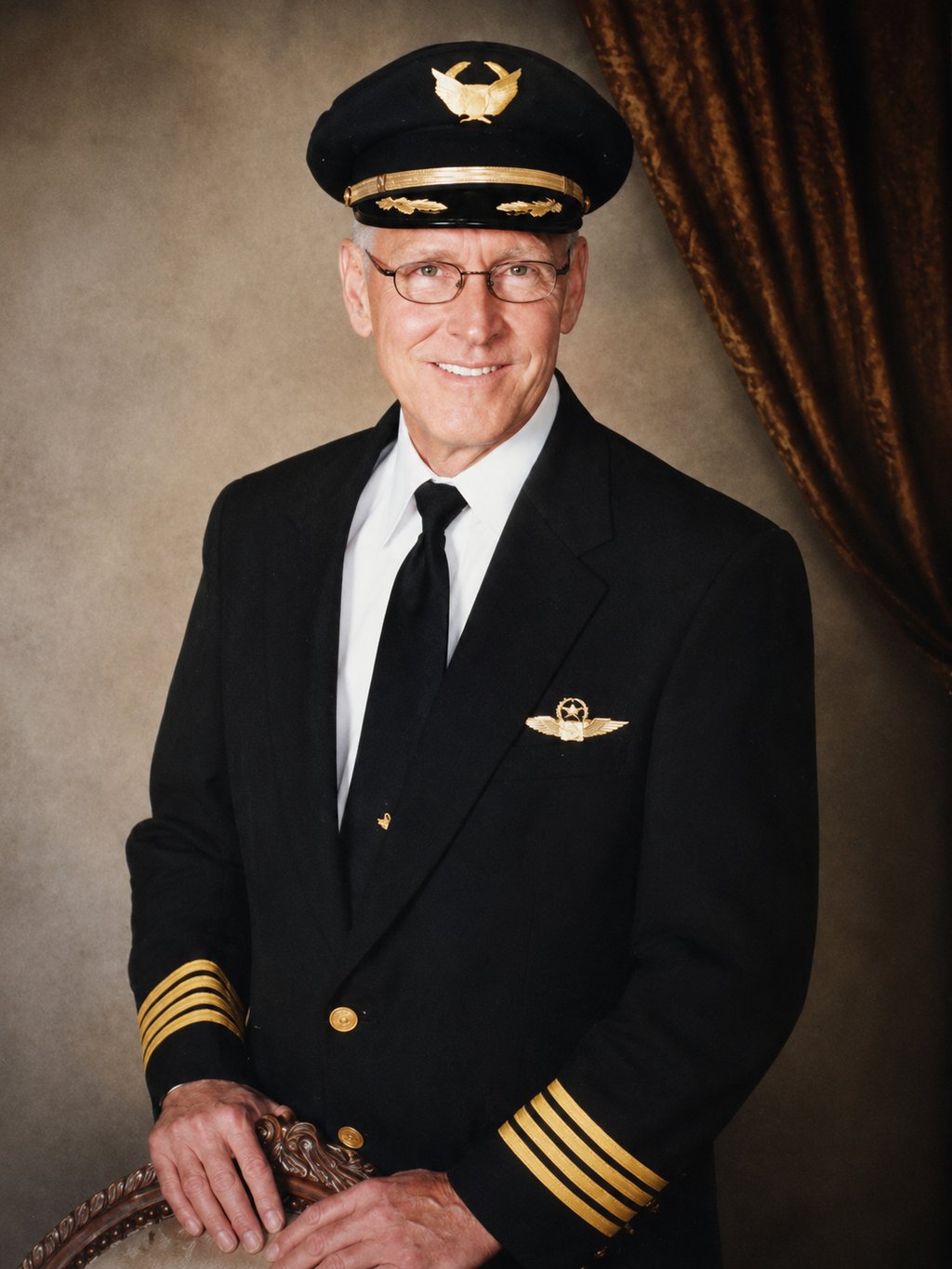
Captain Art Rainbolt rose from Navy boiler room fireman to captain of a Continental Airlines 737.
Twice Art found himself near the center of major moments in American history. In August 1964, Bridget was in the Gulf of Tonkin when North Vietnamese torpedo boats attacked the USS Maddox and USS Turner Joy. The Bridget radio room had received distress calls from the ships under attack. Four decades later, Art and his wife, Candi — a flight attendant — were flying together on 9/11, the day aviation changed forever.
After reading about a nonfatal collision between two jets on the ground, I asked Art if he’d ever had an incident during his flying career.
“No,” he said. “Never scratched the paint.”
While he was still flying, Art bought my father’s ranch. After retirement, he became a fulltime rancher. Daddy loved black Angus cattle. Art broke ranks and gave Candi a couple of Texas longhorns for her birthday. Art loved his cows, his cats and his dog.
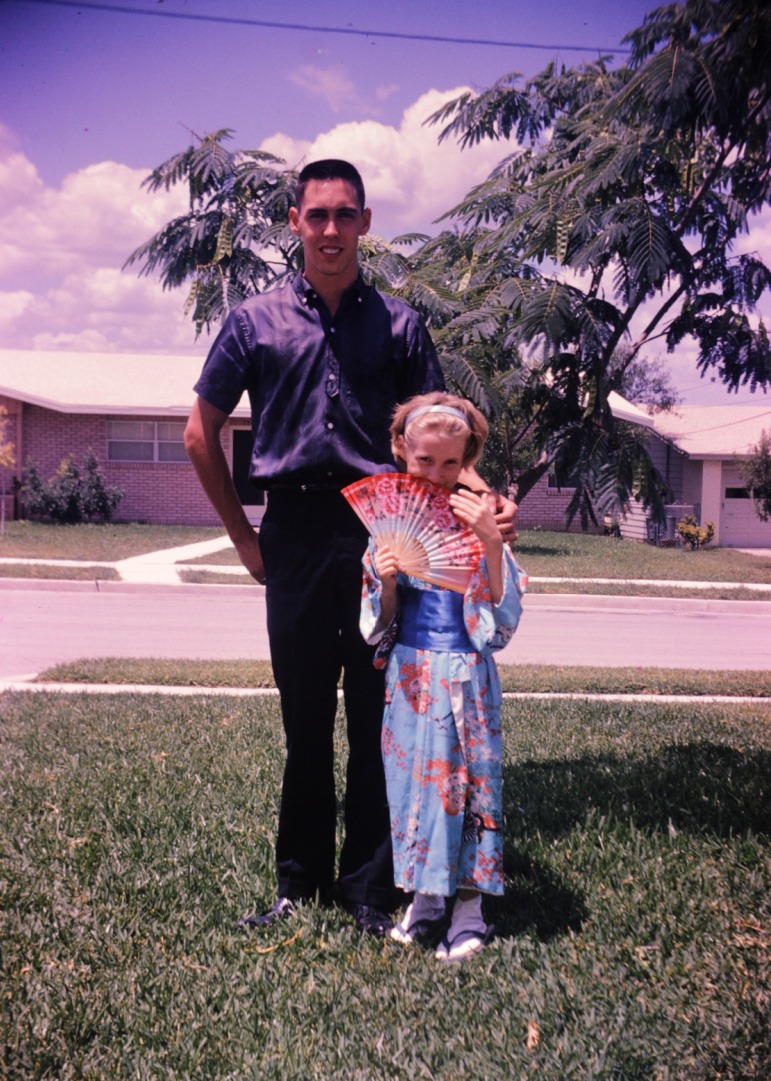
My brother Art and me when I was in first grade. He was home on leave from the Navy and brought me this beautiful outfit from Yokosuka, Japan.
We really didn’t grow up together. By the time I was midway through first grade, Art was already in boot camp. He belonged to the Silent Generation, born during World War II just before Dad shipped out to France. My sister and I were Boomers. Once he became a commercial pilot, we never even lived in the same city.
The thing that finally brought us together was cats.
One day — pre-caller ID — the phone rang. I was already writing science-based books, articles and columns about feline health and behavior. I answered the phone and was shocked. It was my big brother. He said, “I understand you know a lot about cats.” His middle-aged cat, Boca, was hungry, hyperactive and losing weight. The vet couldn’t figure it out. I suggested a T-4 thyroid panel, which wasn’t commonly performed at the time. A few days later, he called back. That was it. Boca started medication, quickly gained weight and settled down.
Suddenly we had something in common. He’d call and tell me about the cats. For the first time in my life, I had a big brother. I cherished those calls. I miss talking to him.
What does all this have to do with Memorial Day?
Those three years Art spent in the boiler room aboard Bridget planted insidious seeds in his body.
Navy boiler room crews were heavily exposed to Trichloroethylene (TCE), an industrial solvent used to clean ship machinery. Boiler rooms were cramped and poorly ventilated, allowing crew members to inhale concentrated vapors for extended periods. Recent research published in JAMA Neurology and other medical journals has identified TCE exposure as a major contributor to Parkinson’s disease in sailors.
Art eventually developed symptoms consistent with Parkinson’s disease. An ER doctor later told Candi his illness was likely connected to his Navy service in the boiler room.
Candi was the best wife ever. Except during surgical recoveries, Art received all his care at home. He passed away in his own bed at the ranch he loved, with his cat Kirby curled beside him.
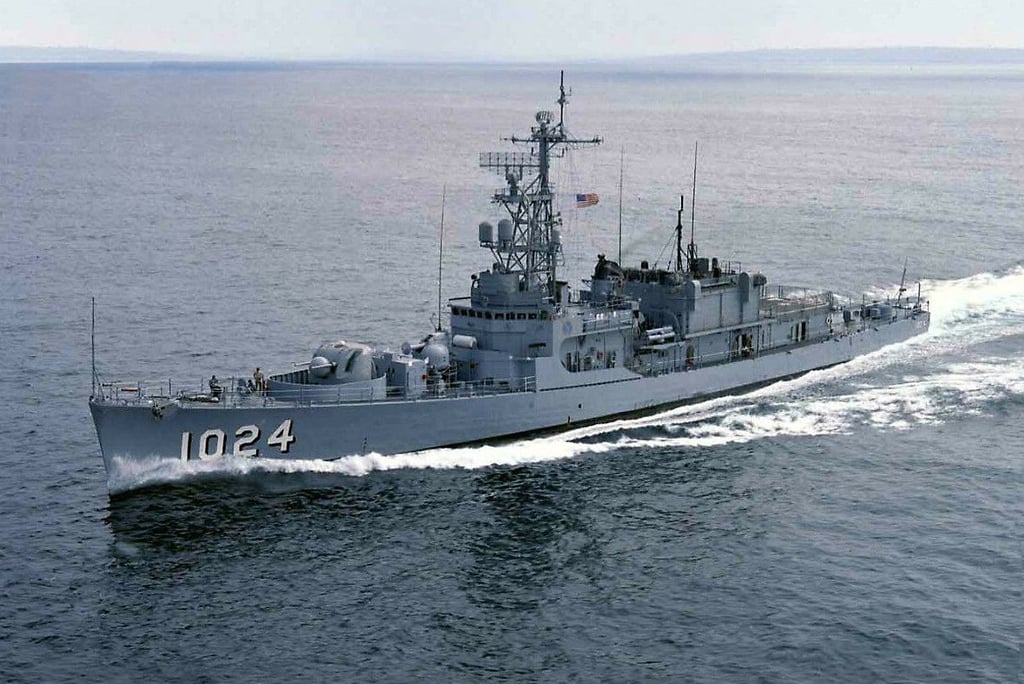
Art Rainbolt served aboard the USS Bridget as a Navy fireman in the ship’s boiler room.